How To End Overthinking (And Enjoy Your Life)
|
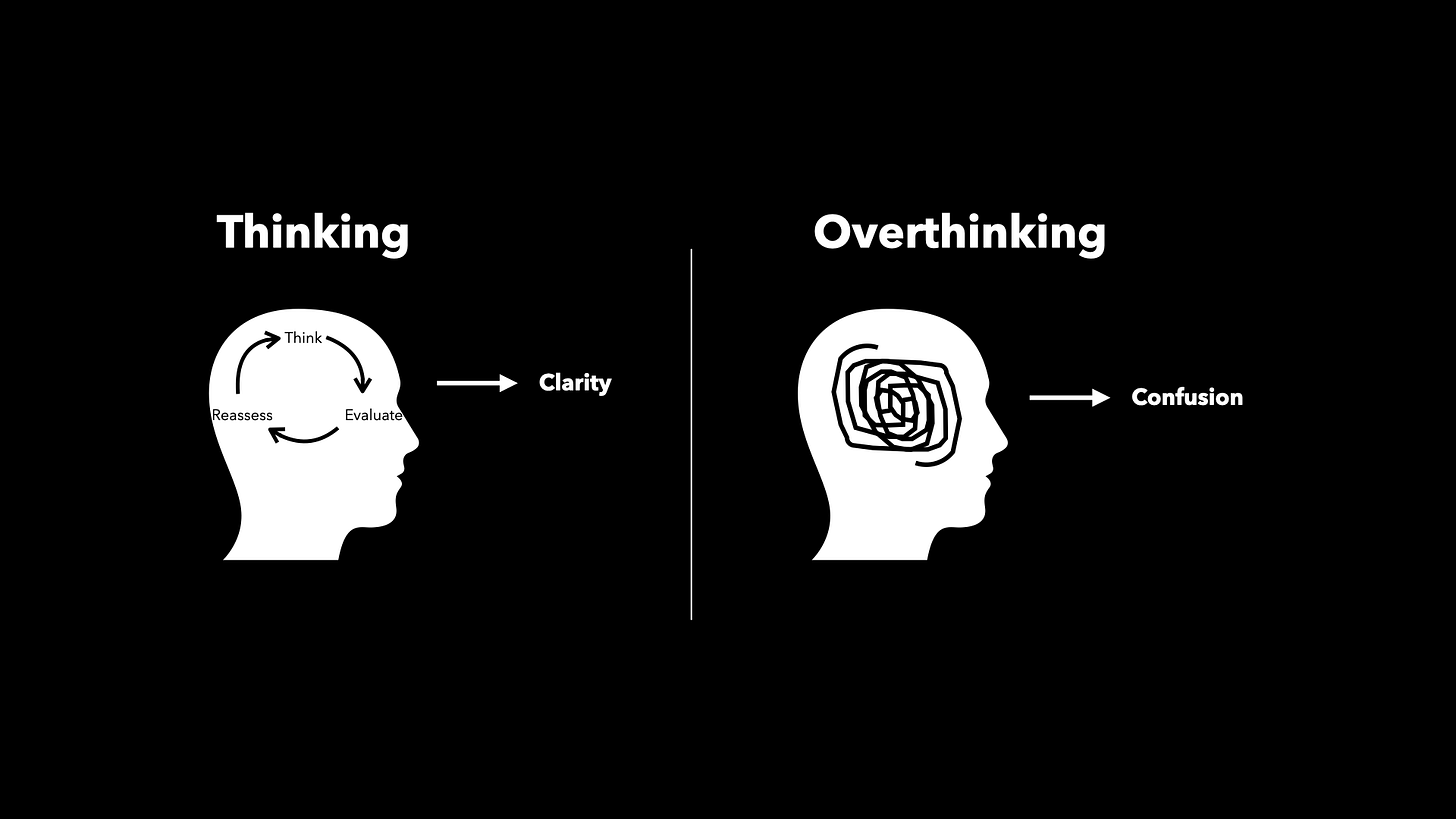
I traded my dream job for a protection plan I didn’t need. That is what overthinking cost me. It was 2019. I published my grad school work at UC Berkeley. One day before the competing lab I was racing with. Just one day ahead. Five years of sprinting, a race to the finish. It was brutal. My graduate work got me an interview at a phenomenal place: doing cutting-edge synthetic biology at an elite research lab in LA. The kind of lab you don’t turn down. The interview went better than I had any right to expect. Green flags everywhere. Then I told my girlfriend about the offer. She said, without hesitating: “I’ll support you wherever you want to go.” That was the moment I should have felt relief. Instead, I recalled an old painful memory. It felt like a door opened behind me, and an old version of me walked through it. Seven years earlier, a different woman had said the exact same words to me. We’d been together for several years. She promised we’d make it through the move. That relationship died on the other side of that promise. The breakup was rough. The kind that you don’t want to think about. So when my girlfriend said “I’ll support you wherever you want to go,” I didn’t hear her. I heard the echo of an old wound. I didn’t tell her what was happening in my mind. I just started looking at jobs closer to where we lived. Places that made sense for us. Except she wasn’t the one asking for that. She was open. She was willing. I was the one who wasn’t. “Yeah... you say that now, but...” I kept that sentence to myself. Weeks passed while I shopped for safer options. By the time I reached back out to the lab, the position was gone. They’d given it to someone else. I got the email and don’t remember where I was standing. What I remember is telling my advisor about it, the man who was genuinely proud of where I was headed. I watched the disappointment move across his face. “It’s fine. I’ve got this other option.” I didn’t believe a word coming out of my mouth, and neither did he. That other option was a lab in San Francisco I already knew I didn’t want. I’d interviewed there and felt the energy immediately. Critical in a way that goes past rigor into something colder. Worse yet, my new advisor told me her father was a communist. Oddly enough, my family fled communist-oppressed Cuba decades before. I had no other option but to take the job… When the pandemic hit, the lab became flooded with neo-Marxist ideology. DEI sessions. Anti-racism trainings that felt less like reckoning and more like witch hunts. White males became the target. Identity politics reached a fever pitch. I’d walked straight into a den with the same bitter spirit my family and I escaped from decades earlier, manifesting itself in a modern form. I was running from a ghost. A woman who said she’d support me. A phantom that was never actually my girlfriend. The ghost of a woman who said she’d support me, and didn’t. The past didn’t just visit. It was steering my life. Overthinking has consequences. Why overthinking spiralsThinking a lot is a sign of fear, not depth. Most people who think deeply are actually scared. Seeing your own coping strategy clearly is the first step to breaking out of it. Overthinking goes in circles. Like a hall of mirrors at a carnival. Every thought reflects the same fear from a slightly different angle. None of it is new information. None of it is real thinking. I didn’t realize I was in a loop. I thought I was being thorough. Weighing options. Doing my research. When in reality, I was walking through a hall of mirrors. Worry. Anxiety. Overwhelm. They’re all doorways into the same room. Overthinking is a sign of fear: fear of reliving a loss you haven’t named. The ghost patternBack when I was looking for a job after grad school, I was coping. I was afraid of reliving the pain of heartbreak. I was trying to get the decision “right”, which paradoxically led me to make the wrong decision. My mind learned: career transitions threaten love, which leads to pain. Even though I was in a completely different situation with a completely different woman, the pattern reemerged. The brain generalizes a painful memory to protect itself from experiencing it again. It can’t tell the difference between the original wound and what’s happening now. The pro-con list. The decision matrix. All of that was just a way to avoid feeling what I needed to feel to get actual clarity. Overthinking leads us into consumption mode. We search for more options. More advice. More frameworks. More content. All the while there’s a subtle belief in the background: “I don’t know enough, have enough, or am enough.” Every new idea spawns ten more, and the sense of lack gets reinforced. This is your mind buffering. Like a computer trying to load something too intensive. Our thoughts are like little life forms. The trapped, unfelt, emotional energy underneath gives them momentum. Thought forms don’t want to die. The grounding problemYou overthink because your mind has nothing real to hold onto You’ve built your life on top of a house of cards with no solid foundation underneath. Without meaning, your mind has no anchor rooting it in something real. Instead, it gets stuck in abstractions. Overthinking is a grounding problem. When meaning is depleted, the mind fills the void with noise.
A virus that wants to stay aliveThought forms live off our attention to replicate, like a virus. There’s a reason stillness feels impossible. Stillness, or a sense of inner spaciousness, is what’s required for actual thinking to happen. Stillness is where overthinking goes to die. Getting there is difficult for a reason. What’s happening in your mindWhen you’re overthinking, your mind has been drafted by the neurosis of your ego. Thought forms colonize your mind and absorb your attention. They live off it. The solution is to starve them. Your brain isn’t broken. It’s powerful, and it cares deeply. It just doesn’t know how to stop. Overthinking is a symptom of disconnection. The body as the foundationTo get out of your head, get grounded in your body. Most people who struggle with overthinking try to quiet their minds by Scrolling X threads, saving frameworks, reading one more article. That only works for so long. Movement precedes cognition. Babies don’t first feel sad; they cry. They don’t first feel angry; they clench their fist and hit everything in their path. Babies don’t think about crying. Their bodies just cry. The body moves first. The story comes after. You can’t think your way to courage or wisdom. You have to embody it. People prone to overthinking hide behind abstractions to avoid raw pain. Pain makes your body contract. This bracing protects you, but sustained, it disembodies you from feeling your way through life. Since feeling is threatening, you rely on thinking your way through instead. Being stuck in your head is the core issue. When you repair the mind-body divide, you gain access to the wisdom in your body. The mind then starts to follow the body's deeper intuitive wisdom. What it takes to quiet a racing mindDrop back into your bodyYou can’t quiet a disembodied mind in a dysregulated body. Your nervous system doesn’t respond to orders. It responds to safety. If your overthinking is being driven by an unaddressed wound from the past- the tension, the armor, the contraction- that’s what needs attention first. I started Brazilian Jiu-Jitsu years ago. BJJ forces you into your body. Someone is trying to choke you, so you don’t have the luxury of thinking. Your mind quiets down as you reach flow states in training because you have no choice but to be present. Pick whatever does that for you. Walking. Climbing. Lifting. Just do something physical. Ideally, something that requires your full attention. Notice where in your body you’re holding tension right now. Shoulders. Neck. Jaw. Noticing starts to dissolve the contraction. The more you practice this, the more you heal the body-mind divide, and the more intuition you gain as you become willing to feel what’s here now. Start your day by moving before you touch your phone. Whatever you give your brain primes it for the rest of the day. Once you’ve redirected attention from the mind to the body, the overthinking subsides. Why? Awareness can’t be in your body and running rampant in your head at the same time. Your mind activity will naturally quiet. From here, it’s easier to work with the mind directly. Stop fighting the voice. Change the relationship.Don’t try to get rid of overthinking. That secretly colludes with the pattern and causes it to grow. Instead, change how you respond to it. Schedule your worry. Give it thirty minutes on your calendar. When anxious thoughts show up at 10 AM, tell them: “Not now. You’ve got 4 PM.” It sounds silly, but it works. The mind relaxes when it knows it’ll get its turn instead of being shoved into a corner. Start noticing how you speak to yourself. Catch phrases like “what if...” and finish that sentence differently by replacing the words for "even if...":
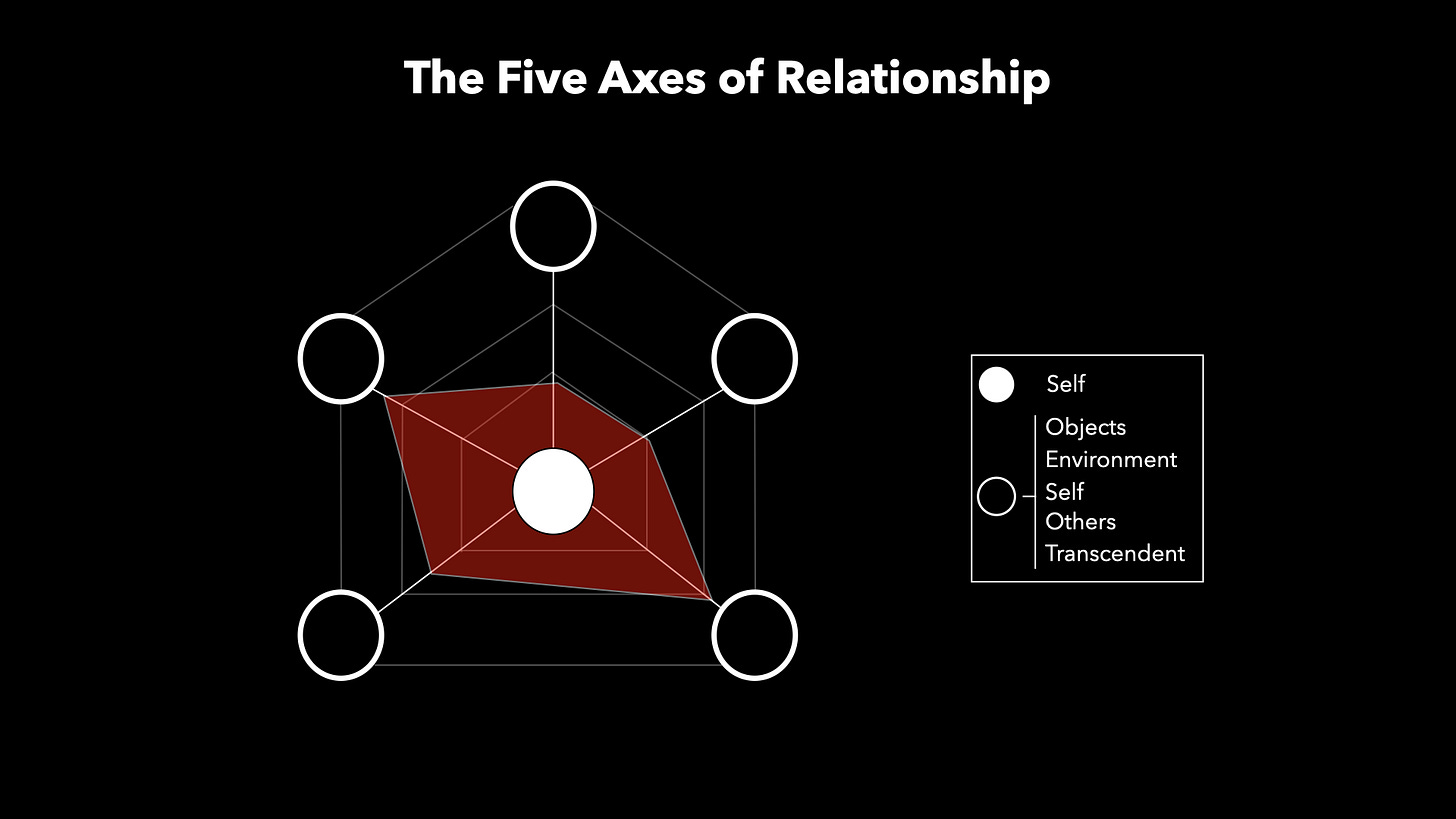
Realize the voice in your head is not you. You are the one aware of it. Simply begin to sense into the care underneath the worry. Sometimes the thinking patterns we have are coming from a place of wanting to protect you. It could be that a part of you learned vigilance at a young age because vigilance kept you safe. Fear met with attention relaxes. Fear met with resistance expands. For me, a quiet mind wasn’t the goal. It was the space I needed before I could rebuild anything that mattered. I didn’t know any of this in 2019. I didn’t know the ghost wasn’t my girlfriend, or that my indecision and overthinking were sacrificing the very thing I worked so hard for. That old memory of heartbreak was in charge of my life for years. Stage 3: Rebuild meaningFor most people who overthink, meaning is the heart of the issue. Meaning arises from our participation with life and our connection to it. Connection requires the body. It requires a quiet enough mind to perceive something beyond itself. Meaning lives where connection does. Here are the Five Axes of Relationship; each tethers you to meaning. When any of these is lacking, your mind fills the void with noise:
Here’s what you can do to create a stronger relationship to each of these:
During the pandemic, my workplace became so toxic that I left (eventually the lab collapsed). I won’t pretend it was a clean break. But on the other side of it, I found something I’d been missing for years. I began to deepen my meditation practice, coach others, pray again, attend church, train in martial arts, and do standup comedy, all of which I’ve found extremely meaningful. Meaning is not something you find. It’s something you realize through how connected you are to everyone and everything around you, and through your participation. To learn more about meaning, check out my previous newsletter. When your mind has something real to hold onto, it stops spinning because it doesn’t need to. Now when the voice in the head starts: the what-ifs, the you should probably... I simply feel where it lives in my body first. I ask it what it’s afraid of. I thank it for caring so much and do the thing anyway. It took losing a dream job to learn that overthinking isn’t a sign of depth. It’s a sign that something real is missing. Fill that, and the noise takes care of itself. Reply and tell me: what’s one place overthinking has been running the show for you? Peace, -Alex P.S. Most people who overthink don't need more information. They need someone to help them see the loop they're standing inside. That's what the free 20-minute Clarity Calls are for. We'll look at where overthinking is costing you, what's underneath it, and what a way out actually looks like. Grab a slot here. |